
Defining the Standards for Laser Hair Removal: Safety / Speed / Comfort for Dark Skin.
Selecting a professional laser hair removal device depends on factors such as the client's skin type, hair color, treatment goals, technical specifications, safety standards, and the device's speed and stability. What are the most common hair removal methods used in beauty salons, and what are the latest technologies available?
755nm Laser: Utilizes a shorter wavelength that is rapidly absorbed by melanin. Key advantages: Features a large spot size and high repetition rate, making it one of the fastest options for treating large areas like the legs or back.
Diode 808nm Laser: Uses a semiconductor to emit a wavelength that targets medium-to-deep tissue, penetrating surface skin pigment to reach the hair follicle directly. Key advantages: Capable of reaching deep into the hair follicle and suitable for a wide range of body areas, including the chest and back.
Nd:YAG 1064nm Laser: Leverages a longer wavelength compared to other options; due to lower melanin absorption, the light safely bypasses surface skin pigment. Studies show this laser significantly reduces the risk of superficial burns and post-inflammatory hyperpigmentation (PIH) in darker skin tones while effectively reducing hair growth, with no adverse reactions or paradoxical hypertrichosis reported. While the Nd:YAG laser remains the gold standard for patients with the darkest skin tones, the advent of diode laser technology has expanded the range of patients who can be safely treated.
Intense Pulsed Light (IPL): Uses filtered, broad-spectrum polychromatic light rather than a single, concentrated beam. Key advantages: Offers rapid coverage of large areas at a lower cost, though its power and precision are generally lower than those of true lasers. Recent market analysis indicates that IPL is comparable to diode and 755nm lasers in terms of safety and side-effect profiles, while causing less pain. Consequently, although IPL lasers efficacy is slightly lower than that of diode and 755nm lasers, it is safe for all skin types, including darker skin tones.
Ruby 694nm Laser: Principle: This is the earliest laser technology, utilizing short-wavelength red light to target melanin. Key advantages: It works well on light skin tones; however, the technology is now largely obsolete due to its slow speed and is rarely used in modern clinics.
Is laser hair removal better than shaving?
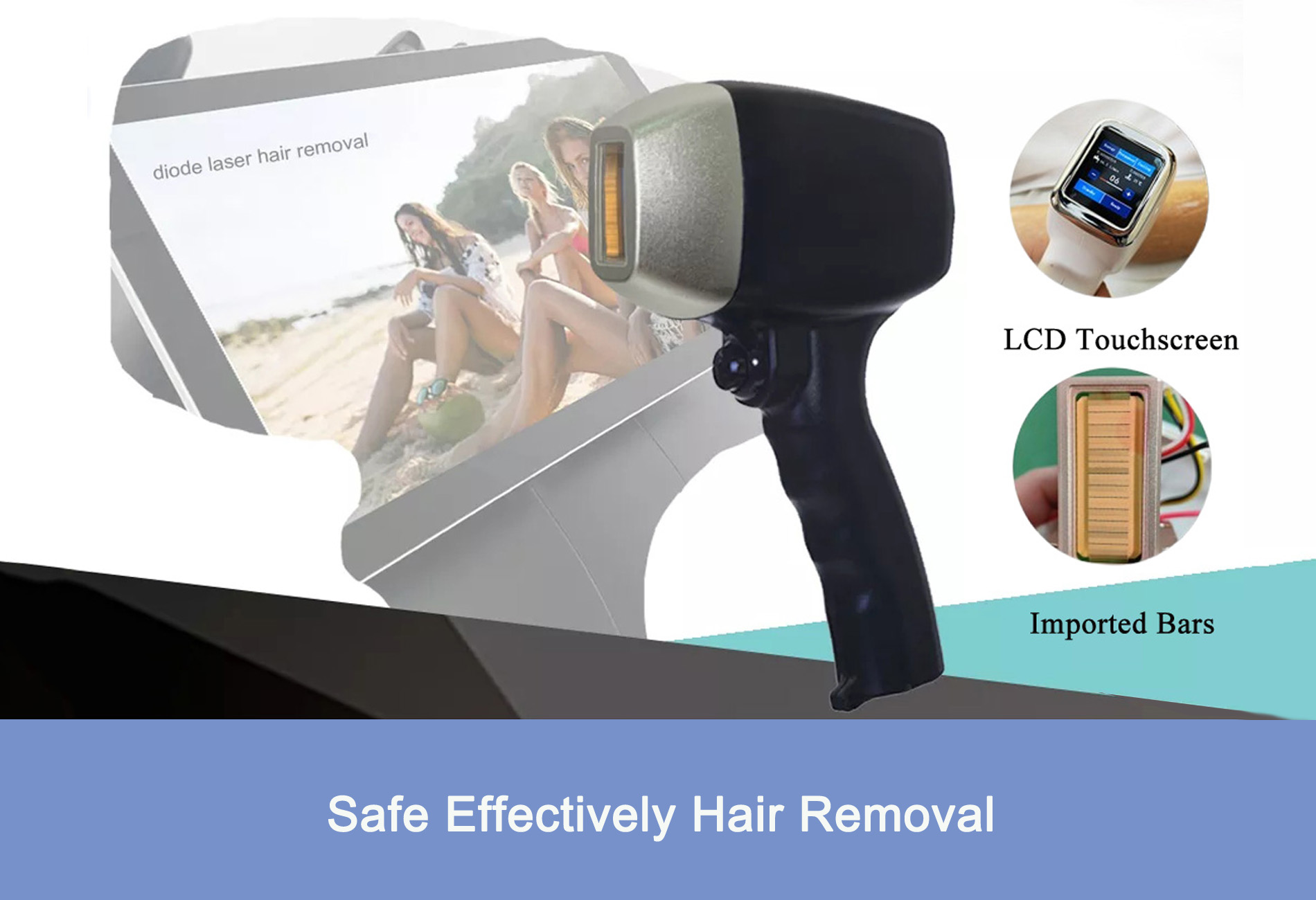
Compared to traditional methods like shaving, waxing, or plucking, laser hair removal offers more effective control over unwanted hair with longer-lasting results. It is most effective when hair is in the growth phase. The procedure uses specific wavelengths of light that are absorbed by hair pigment (melanin) and converted into heat; this heat destroys the hair follicle at the root while leaving the surrounding skin unharmed. A series of 6 to 8 sessions—spaced several weeks apart—is required to ensure treatment occurs during the active growth phase, thereby guaranteeing stable, long-lasting results. You may feel a slight stinging or burning sensation during the laser pulses. The Virikon device utilizes advanced contact cooling technology; the handpiece features software-controlled temperature sensors and a powerful TEC cooling system, allowing the handpiece temperature to drop as low as -30°C. It offers four wavelengths (755nm, 808nm, 940nm, and 1064nm), and the treatment surface—specifically the area in contact with the skin—is made of sapphire crystal. This material provides excellent thermal conductivity, making the treatment comfortable and completely painless while ensuring high quality and patient comfort.
What is the treatment schedule for hair removal?
Most patients require 6–8 sessions for body areas, spaced 4–8 weeks apart. Facial areas—such as the upper lip, chin, and jawline—typically require 8–12 sessions due to higher hair follicle density and hormonal influences. Patients with darker skin tones may require more sessions, while those with hormonal imbalances—such as Polycystic Ovary Syndrome (PCOS)—may need 10–15 sessions and more frequent maintenance treatments.Common treatment areas:
Laser hair removal can be performed on almost any part of the body where unwanted hair needs to be removed.
Face: Popular areas include the upper lip, chin, and sideburns.
Upper body: Common treatment areas include the shoulders, back, chest, and abdomen.
Lower body: Thighs, calves, and feet are common treatment areas, resulting in smoother skin.
Intimate areas: Bikini line and Brazilian treatments offer customized solutions for sensitive zones.
How to prepare for laser hair removal?
For optimal results, it is recommended to shave the treatment area 1–2 days prior to the session so the laser can focus directly on the hair follicles; avoid waxing or plucking in the weeks leading up to treatment. Refrain from using harsh skincare products, such as exfoliants or retinoids.
Why choose Virikon laser hair removal? 1. Long-lasting results, 2. Precision and efficiency, 3. Time-saving, 4. Ongoing technical support and troubleshooting assistance, 5. Regular software updates and feature upgrades, 6. Clinical resources and best practice guidance.
We offer professionally customized hair removal solutions tailored to individual needs. By precisely adjusting energy levels based on hair texture and skin type, we effectively address issues such as dense, coarse, or dark hair. Our "Ice-Cool" constant-temperature technology protects the skin, minimizing heat sensation and irritation to provide a non-invasive treatment experience that causes no skin damage.
Indications, contraindications, and pricing depend on region and registration status—always follow the IFU for your device revision.
Request configuration